Perspective
A Moveable Village: How Birth Companions was built by volunteers
01 Jun 2026
|
As part of Volunteers' week, Denise Marshall, one of Birth Companions’ founders, reflects on the importance of volunteers at Birth Companions.

As part of Volunteers' week, Denise Marshall, one of Birth Companions’ founders, reflects on the importance of volunteers at Birth Companions.
Denise Marshall, one of Birth Companions’ founders, retired last year after three decades. Here she explains how the charity was founded and built by volunteers and why they remain one of its greatest strengths.
From the very beginning, volunteers were the heart of Birth Companions.
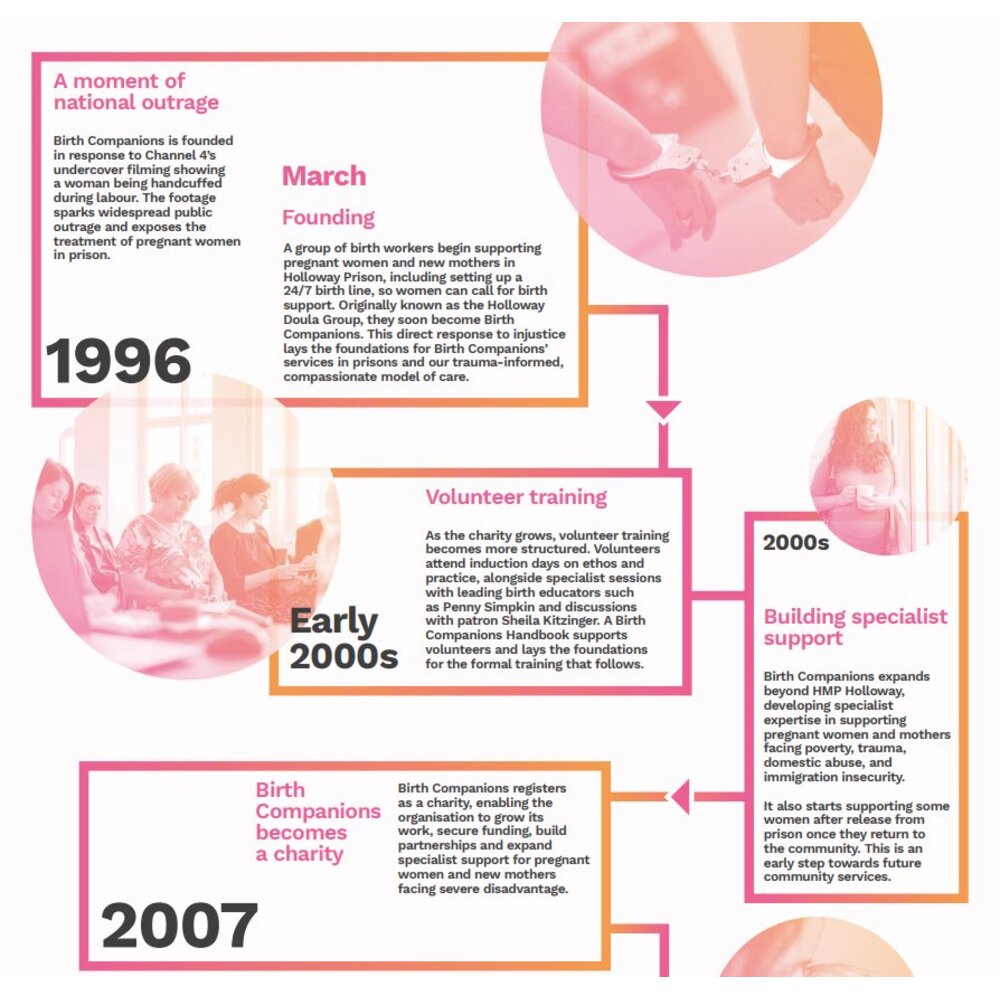
When the Holloway Doula Group, as we were first known, came together in 1996, it was a small group of women with birth support experience who understood that pregnant women in prison needed emotional and practical support at one of the most important times in their lives. They were antenatal teachers, midwives and doulas, and they gave their time because they believed no woman should face birth alone.
That spirit has stayed with Birth Companions ever since.
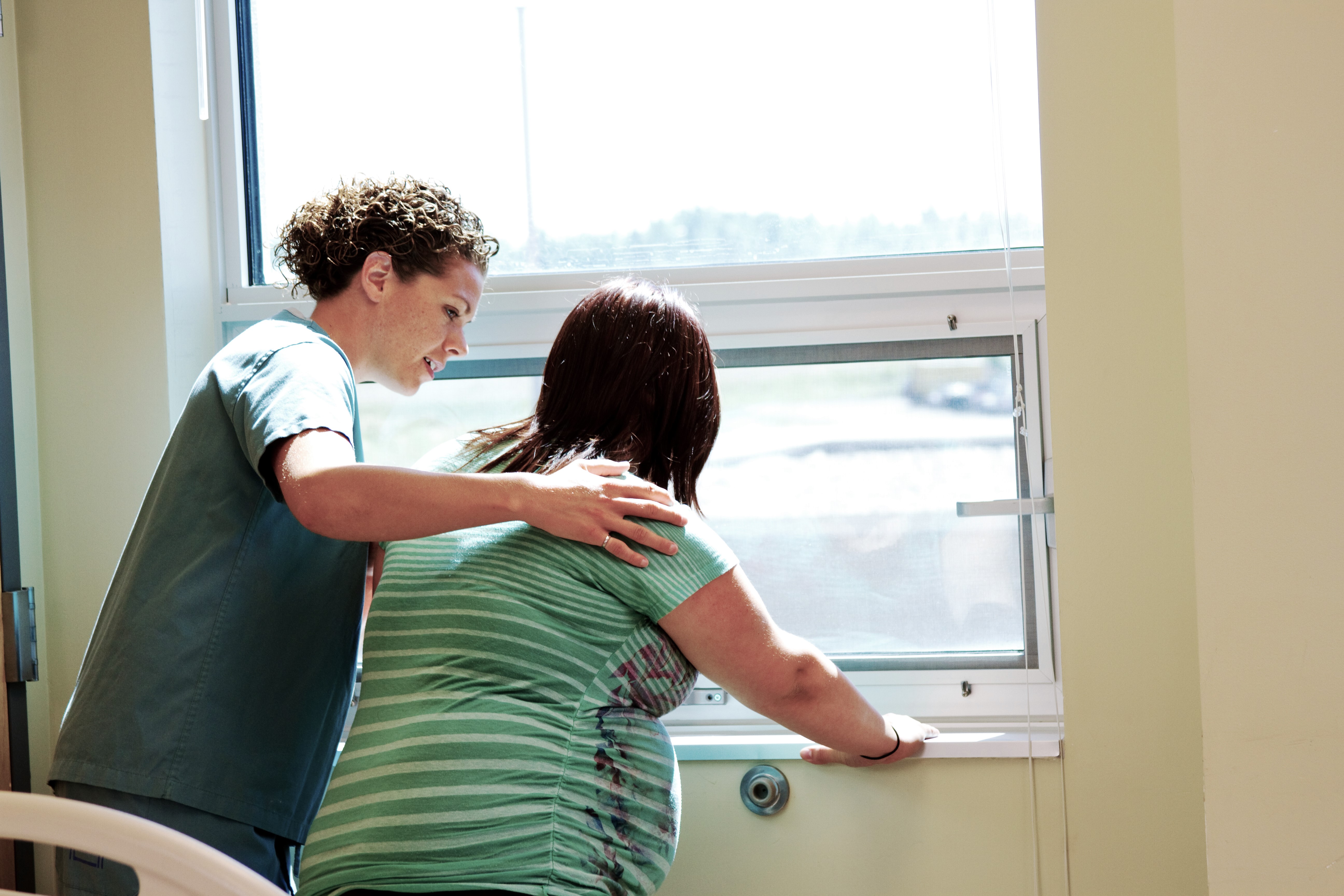
In the early years our volunteers supported women from HMP Holloway when they went to give birth in hospital. They delivered antenatal classes in the prison and built relationships before the birth. They listened, offered reassurance, helped women think about their wishes and concerns, and made sure that, as far as possible, a woman would have the support she wanted and needed when she went into labour.
There was something very powerful about that support being freely given. Health professionals and prison officers, escorting women at the hospital, would often remark on it. Someone had come out in the middle of the night to be with a woman in labour, and they were not being paid to do it. For the women we supported, that often carried a special meaning. They knew that someone had chosen to be there just for them.
One woman told us;
“I had no family or friends by my side during pregnancy and birth, but I wasn’t alone. Birth Companions became my family.”
A volunteer once described our support as a “moveable village”; a network of women ready to gather around a mother and baby when it mattered most. I think that captures something important about the role volunteers have played in this incredible organisation.
As Birth Companions grew, we knew that volunteers needed to be well prepared and well supported. The original group had extensive birth support experience, but over time we developed a training programme so we could recruit more widely. Many volunteers brought valuable skills, insight and commitment, but had not necessarily worked in this field before. We wanted people to be able to offer support that was warm and caring, but also safe and professional.
Our bespoke training programme has become a very important part of that. It includes specific focus on boundaries, lone working,self-care and safeguarding, as well covering support during pregnancy, birth and early parenting as well as our Birth Companions ethos and trauma-informed way of working. This protects the women we support, but it also protects our volunteers. Women often say that their birth companions are like friends or family, and that closeness matters; but we have learned over the years that clear boundaries matter too.
A staff member now meets women first and helps co-ordinate support. We usually try to have two or three volunteers involved with each woman, so that the relationship is clearly with Birth Companions rather than with one individual volunteer. Women understand they have a team on their side and volunteers are less likely to feel overwhelmed or solely responsible.
Working in this way has not always been easy. Sometimes it can feel hard not to share personal phone numbers or stay in touch after support ends, as many doulas often do. But we learned that for volunteers to be able to continue showing up for births, and not become exhausted by the intensity of that work, they needed those clear boundaries. We saw that these boundaries also made it easier for women to transition from our support into other services and empowered them to build their own strength and future support networks.
Looking after our volunteers has always been essential to Birth Companions. The work can be deeply rewarding, but it can also be emotionally demanding. The original group of volunteers supported each other through the difficult situations they were encountering in prison. They met monthly in a comfortable space, with refreshments, to talk about births and visits. In between meetings, they debriefed on the phone or met up one-to-one.
We still use a similar model today. Each of Birth Companions’ services has a small team and a co-ordinator who can debrief with volunteers and sessional staff after visits, groups and births. There are regular team meetings, often over lunch or with snacks in the evening. That may sound like a small thing, but it isn’t. Warm welcomes and sharing food together matter. People need to feel nurtured if this work is to be sustainable.
Over the years our awareness of vicarious trauma has also grown. Volunteers and staff often hear very difficult stories and support women through painful and uncertain situations. We have responded by developing more training, including on recognising stress and on self-care. When particularly difficult situations have arisen, we have held extra meetings so that everyone involved can come together and reflect as a group.
We have also learned that new areas of work can bring new pressures. When we first began supporting women in the community, some experienced volunteers felt overwhelmed. We had assumed it would be easier than prison work, but in some ways it was harder. In prison there are clear boundaries of time and place. In the community, volunteers sometimes left a visit knowing a woman was completely alone, or that she had nowhere safe to go home to with her baby. We had to learn from that and develop new training and guidance for community work.
Volunteers have helped make Birth Companions what it is, but this has only worked because the organisation has valued and looked after them too. We ask for feedback. We listen. We adapt. And we keep learning.
During Volunteers’ Week, we want to say thank you to all the volunteers who have been part of Birth Companions over the years. You have given your time, your compassion and your commitment in ways that have made a real difference to women and babies. This charity was built by volunteers, and you remain one of its greatest strengths.
This is based on Denise’s contribution to ‘Complex Social Issues and the Perinatal Woman’, Edited by Laura Abbott 2021.
Read about 30 years of Birth Companions and the milestones in our history.